Purchase Order Essentials [Part 2]: Mastering the PO Header - Avoid Costly Shipping Errors
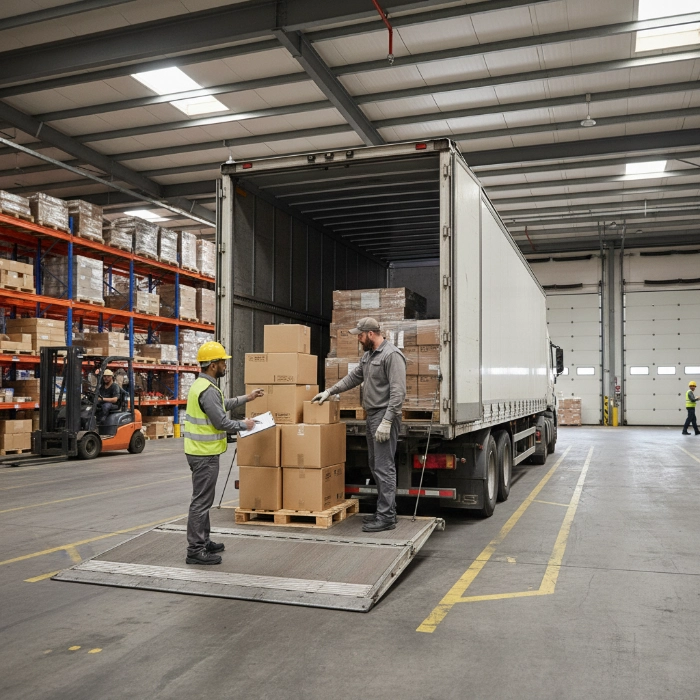
Let's talk about the "ship to" portion of the purchase order. It might seem like an incidental detail, but getting this section right is the difference between a smooth logistics delivery and a nightmare at the freight terminal. After spending years handling everything from small parcel boxes to high-value commercial cooking equipment, I've learned specific shipping best practices that can save you hundreds, if not thousands, of dollars in freight mishaps.
Accurate Shipping Names and Addresses
When you first begin to fill out the destination's name, you always want to use the legal name of the delivery location. For example, if the business is legally "Santa’s Diner," you don't want to put "Santa’s Equipment Supply" or "Santa's Cafe". You don't want to risk a delivery delay. When in doubt, it is recommended to confirm the proper name with the name that appears on the official website of the recipient or consignee (entity designated to receive the goods).
One of my biggest pet peeves is shipping abbreviations. I’ve seen so many POs that will use initials in place of an official name for the destination. The name might say "JMES" instead of spelling out "John Muir Elementary School". The vendor who fills out the BOL (Bill of lading) or the freight company isn't always going to know what your shorthand means, and you don't want anyone guessing at the delivering terminal. One might "google" the address but this method can prove unreliable if an outdated business name is still attached to the location.
The same goes for the physical address. If you punch in an address into an online map platform, you might find the same street name and number in multiple cities. You must be specific and include the suite number, building number and even the "floor" number to avoid any confusion. Commercial locations might be located in a "complex" where all the buildings look alike. Often the building or suite number is the only data point that differentiates the customer.
And please, double-check that zip code. I once had a heavy smoker shipping to South San Francisco, and I needed to get a freight estimate. Sadly, I was one digit off and used the zip code for San Francisco proper. When the invoice came back, the freight cost was hundreds of dollars higher because South SF is much harder for trucks to navigate, and carriers charge more for it. Since fuel prices are often in flux, it's difficult for vendors to offer exact freight rates until the day an order ships.
The Human Element: Contacts and Communication
Having valid contact information for a delivery is extremely important, especially for huge facilities like hotels or hospitals. You don't only need a contact name but also a department name. If an order is for the kitchen, mark it as "Kitchen - Chef Sam". I’ve had small boxes get lost in hotel lobbies because they were dropped off without a clear contact name. The same requirements for contacts also applies to large deliveries received in the warehouse. You don't want unassigned pallets sitting in storage for any period of time.
When it comes to phone numbers, please do not use 800-numbers that send someone to a long menu. When setting up a delivery, the trucking company or carrier needs to get a live body on the phone quickly. Keep in mind the carrier's delivering terminal is managing dozens of deliveries per day and they might have to wait another 24-hours to call you again. The shipping information needs to have either a direct office line or, preferably, a cell phone number. Email addresses are helpful but warehouse personnel are not always in front of their computer.
Understanding Ownership (F.O.B.) and Ship Methods
Purchase orders will often have an F.O.B. designation. F.O.B. stands for either "Free on Board" or "Freight on Board". It’s all about who owns the shipment during transit.
FOB Origin: You become responsible the second your order leaves the vendor’s dock (the origin point). This is more common because it allows vendors to invoice you as soon as the order ships.
FOB Destination: The vendor is responsible all the way until it hits your door (the destination point). Buyers might already have negotiated "free freight" for their order, but the vendor might still require "FOB Origin" on the po, again, so they can invoice right away.
You’ll also see a few common "Ship Via" methods:
Prepay and Add: The vendor ships your order, chooses the carrier (usually the cheapest), and adds the cost to your invoice.
Free Freight: The vendor covers the shipping, usually because you met a dollar amount or quantity threshold. They still choose the carrier here, and it won't include additional requirements such as a "Liftgate" or "inside delivery".
Third Party: You pick the carrier, often using a broker who will search through a network of carriers to find you the best price. Always put your account number (with the broker) on the PO to avoid billing disputes later. It would also be helpful to include the broker's quote number as well.
Special Instructions That Save Your Budget
Purchase orders will almost always include a "Special Instructions" section below the body of the po. However, if any of these instructions pertain to shipping, they need to be included in the "ship to" section. Whether the vendor is using a software program or a human to enter your order into their system, you don't want them having to touch the shipping information twice. All information referring to the delivery should be in ONE place on the po so the vendor can process that section in one shot.
Put your special instructions right into the shipping info section where they can’t be missed. If the destination does not have set receiving hours (8am to 5pm), you MUST ask for "Call for Appointment". The carrier will call 24-hours ahead to set up a window for delivery. If a truck shows up and you aren't there or cannot accept delivery for some reason, it goes back to the terminal hitting you with a re-delivery charge to come back out. The rates will vary depending on the trucking company, but re-delivery charges are typically based on weight, space taken on the truck, and the distance from the terminal to your location. This will also increase the amount of times your order travels back and forth, thus incurring a higher risk of damage to the order.
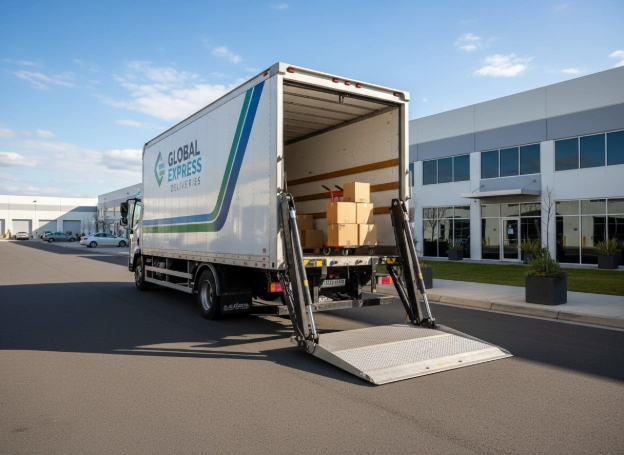
A very important point to note on the purchase order is whether or not a delivery location needs a "Liftgate". Trucks are high off the ground. If you have a 400-lb unit strapped to a pallet, there is no way to offload the unit unless you have a forklift or if the truck has a liftgate. A "liftgate" is defined as a hydraulic platform mounted on the rear of a truck that can lower itself to the ground. There is a fee for the Liftgate and varies by carrier, but it is required if the facility has no dock or forklift.
Parcel vs. Freight (LTL)
When the vendor is planning to ship an order, they have to determine if it will ship via "parcel" (like UPS or FedEx) or if it will ship via a freight truck. Most freight shipments are classified as L.T.L. or "Less than Truckload". This means your pallet(s) will share a truck with other orders stopping at several hubs on its way to the destination. If your order happens to fill a standard 53-foot truck, it will be designated as a "Full Truckload".
Generally, the cutoff for "Parcel" (UPS/FedEx Ground) is 75 to 80 pounds, though the hard limit is most likely 150-lbs. Parcel shipments are processed using several conveyors (kind of like luggage at the airport). If the box is on the heavy side, even large conveyors may not handle it very well and it could get damaged. There are also safety concerns expecting drivers to carry such a heavy item into a building. For this and other reasons, it's best to keep the limit at 75-lbs or so.
For high-value items, consider:
Dedicated Delivery: The truck goes straight to you without stopping at several hubs. This method is more expensive but also helps minimize the chance for damage.
Signature Delivery: Parcel shipments do not necessarily require a signature for delivery. If your shipment is 10-boxes and you only receive 7-boxes, you won't know you're missing the other 3-boxes unless you sign for it. For expensive items, it's recommended to pay the extra fee to require the driver to get a signature to deliver.
The Logistics of Heavy Equipment
If you're receiving a heavy piece of equipment, like a large pizza oven, you will absolutely need a forklift. The Liftgate on the back of a truck will have a weight and size limit. Units will large dimensions most likely have to deliver on a flatbed truck. The destination will then need a Forklift to offload the unit. If you have to rent the forklift, please secure a spec sheet of the unit(s) involved and send that information over to the rental company so they can verify the proper weight capacity for the forklift you need. Most likely you will also need "extended forks" which can help avoid the unit from tipping over if the forks are too short.
The Golden Rule of Receiving: Inspect Before You Sign
The moment the delivery truck arrives, you need to be on high alert. Once you sign that delivery slip, you are accepting responsibility for the order. Walk around the pallet. If you see any holes or any evidence of damage, do not sign for it. Tell the driver, "No, it's damaged. I cannot accept delivery". Even if you accept the order and sign the delivery slip as "damaged", you still own the order. If you refuse the order all together, it goes back to the vendor.
Now, the driver does not want to go back to the delivering terminal with anything in his truck. So, if he gives you a "story" saying you have to accept the order or you can't refuse it for some reason, politely stand your ground and say no. If you accept it, you are responsible for filing the freight claim (if there is damage). Please take pictures of the order no matter if you accept or refuse the delivery.
If your receiving department ends up accepting the delivery and notices the damage afterward, please take pictures immediately and notify the buyer. Also, do NOT throw away the packaging. Whether you or the vendor end up filing the freight claim, the trucking company will request pictures of the unit to gather evidence as to what happened. Not having any proof of the damage can affect the outcome of the freight claim.
Conclusion
Mastering the complexities of purchase order shipping and freight logistics is a vital skill for any business owner or procurement manager. By focusing on precise legal names, clear communication with carriers, and a strict inspection process at the point of delivery, you protect your bottom line from unnecessary fees and damaged goods. Remember, a well-documented PO is your best defense against the hidden variables inherent in the shipping world.
Implementing these best practices will help ensure your order arrives on time, in good condition, and free of unex